The administrative headquarters of the Center for Innovation in New Energies (CINE) was inaugurated at Unicamp on 15 December. The event marked the inauguration of a space for common use, located at Rua Michel Debrun, within the Unicamp campus, in a building linked to the Faculty of Chemical Engineering. The environment has workstations for the staff that already supports the researchers in their projects. The headquarters also has a social…
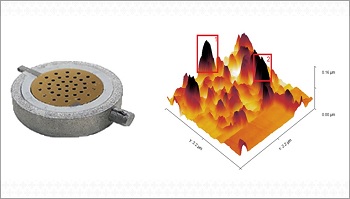
In an paper in the high-impact journal Advanced Energy Materials, researchers from CINE and collaborators present a new method, faster and more accurate than those used so far, to study lithium-oxygen (Li-O2) batteries. The method sheds new light on the chemical reactions that take place in these promising devices. Lithium-oxygen batteries can be the key to storing energy on a large scale (for example, in wind or solar farms), as…

Seven members of CINE are included in a ranking based on information from Google Scholar, which lists the most productive scientists from countries in the BRICS group (Brazil, Russia, India, China and South Africa). The ranking, whose first edition was released at the end of September, uses the new AD Scientific Index. CINE researchers on this list are: Rubens Maciel Filho (UNICAMP), principal investigator of the Advanced Energy Storage (AES)…
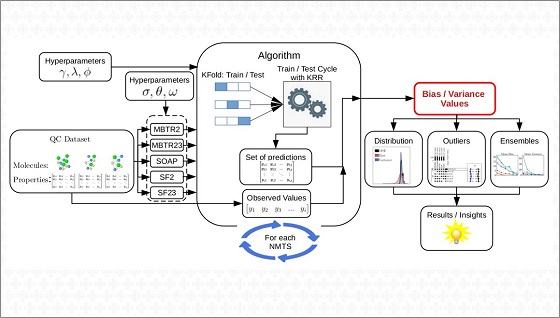
Machine learning computer programs stand out from all others for having the ability to learn from experience, that is, from interaction with a set of data. The greater the experience, the better these programs or models should perform in the task for which they were created. However, they don’t always work perfectly. Errors do happen, and being able to detect and resolve them is essential. A team of researchers from…

On August 16, CINE hold in online format, a meeting of leaders of the center with members of the International Advisory Board (IAB). During the meeting, the members of the board could share their perceptions about the three years of activity of CINE and each of its research divisions, including reflections on the advances that were achieved, as well as recommendations for the next directions. “The meeting provided high-level exchanges…
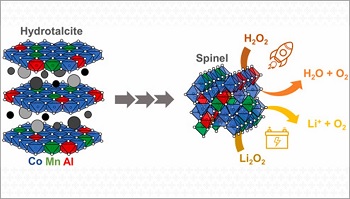
CINE researchers and collaborators have taken an important step in the development of catalysts to optimize the performance of lithium-oxygen (Li-O2) batteries. These devices, which are still in the development stage, stand out for their ability to store much more energy than lithium-ion batteries, but they still face challenges in improving their cyclability (the amount of recharges the battery allows before end of life). “This work contributes to the construction…
CINE’s Advanced Energy Storage Division (AES) announces the approval of a project in FINEP 2030, a program whose objective is the development of the automotive sector chain within the Brazilian Federal Government’s program “Rota 2030”. The AES project will develop a solution for electric vehicles with on-board electricity generation from ethanol. “This new project will develop two classes of batteries, in addition to third generation fuel cells with internal and…
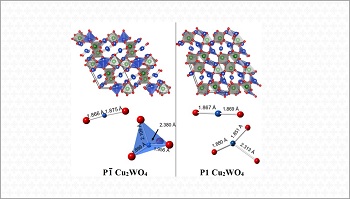
Reducing carbon dioxide (CO2) emissions into the atmosphere is a global objective that involves efforts from different sectors of society. Among the scientific efforts is the development of technologies for converting the carbon dioxide molecule into other carbon-based compounds that can be used as raw materials in industry. At CINE, a group of researchers from UNICAMP, led by Professor Claudia Longo, has been working in this research line. Their proposal…