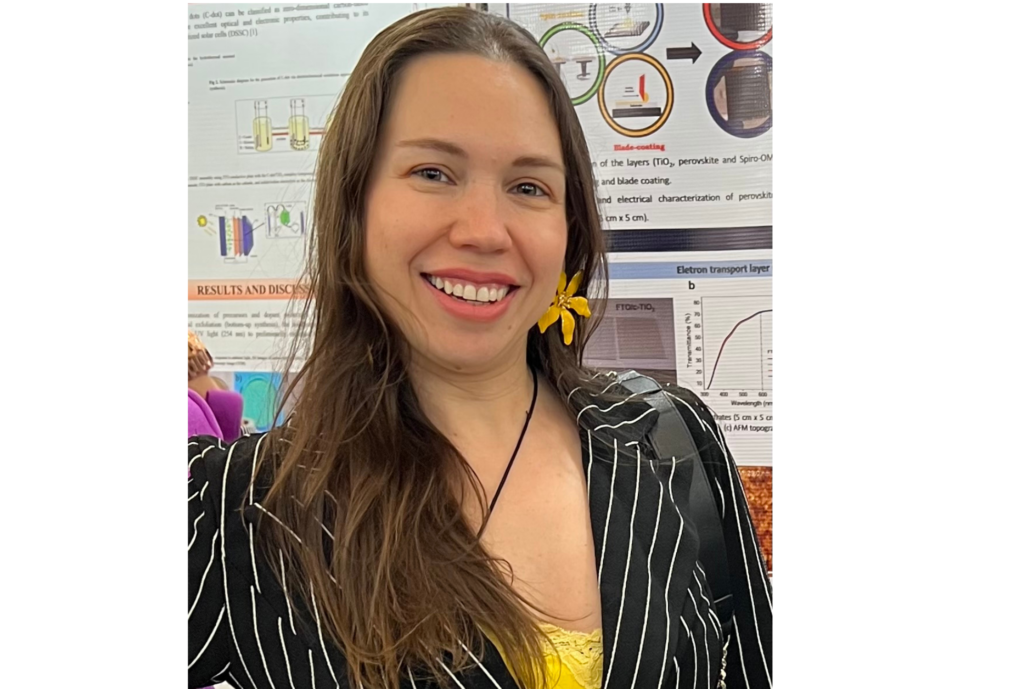
Jilian Nei de Freitas was still an undergraduate student at UNICAMP when she made decisions that shaped her professional trajectory. At that time—the year 2000—seeking to fulfill her childhood dream of becoming a scientist and building the future, she decided to embark on undergraduate research in a cutting-edge field where the results could be applied to actual products. Consequently, she started working on the development of emerging solar cell technologies….

Computational research conducted by CINE members has advanced the understanding of a process that occurs spontaneously within sodium-ion batteries and significantly impacts their performance. The study’s results offer concrete guidelines for controlling this phenomenon and, consequently, improving battery performance. Sodium-ion batteries are promising contenders to compete with lithium-ion batteries, which currently dominate the market. Indeed, sodium is far more abundant and widely distributed across Earth than lithium; however, sodium technology…
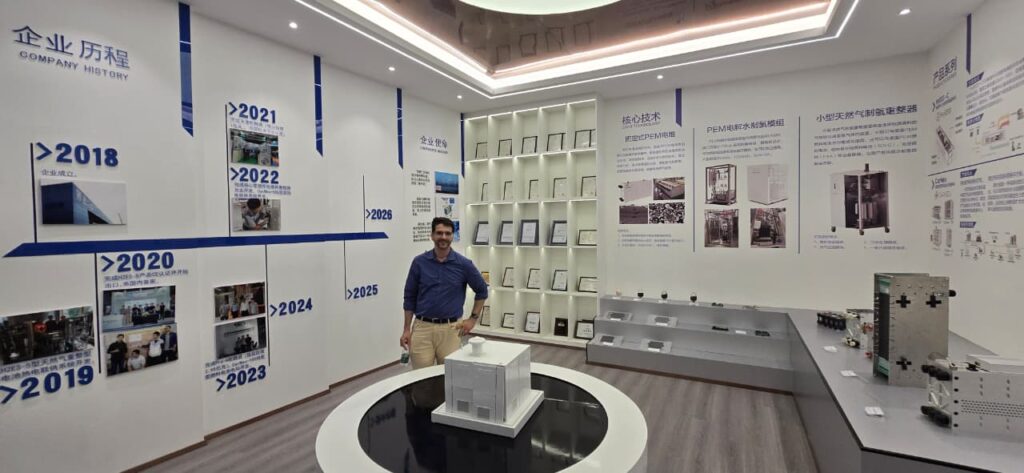
Bruno Bitarães Neto Salgado Brandão, a CINE technology transfer fellow since July 1st of this year, undertook his first work mission in China. Between July 2 and 22, he participated in academic seminars and visited Chinese companies. Some of these activities took place as part of the “Green Energy Youth Leadership Camp,” an initiative by the North China Electric Power University (NCEPU) designed to immerse young people from around the…
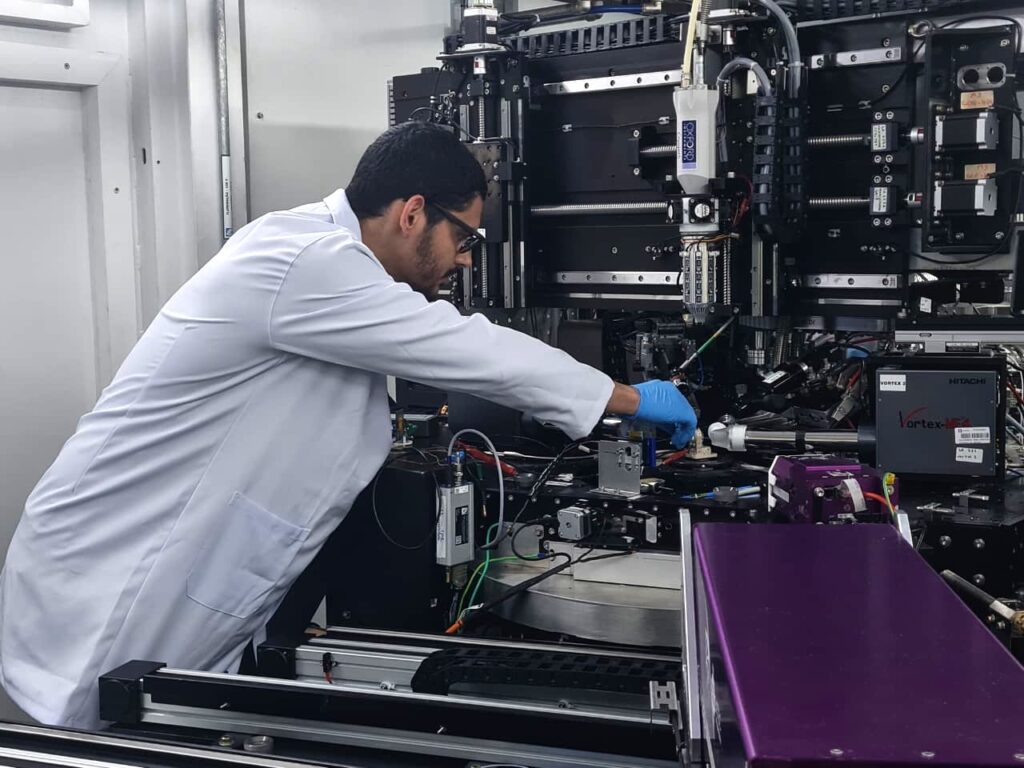
A multidisciplinary scientific team evaluated the long-term performance of a material used in the sustainable production of ammonia. The study’s results provide guidelines for designing more stable and efficient materials. Ammonia (NH3) is one of the most widely produced chemical compounds in the world. In addition to its extensive use in the fertilizer industry, it serves as a refrigerant fluid and is used in the manufacture of various products, ranging…
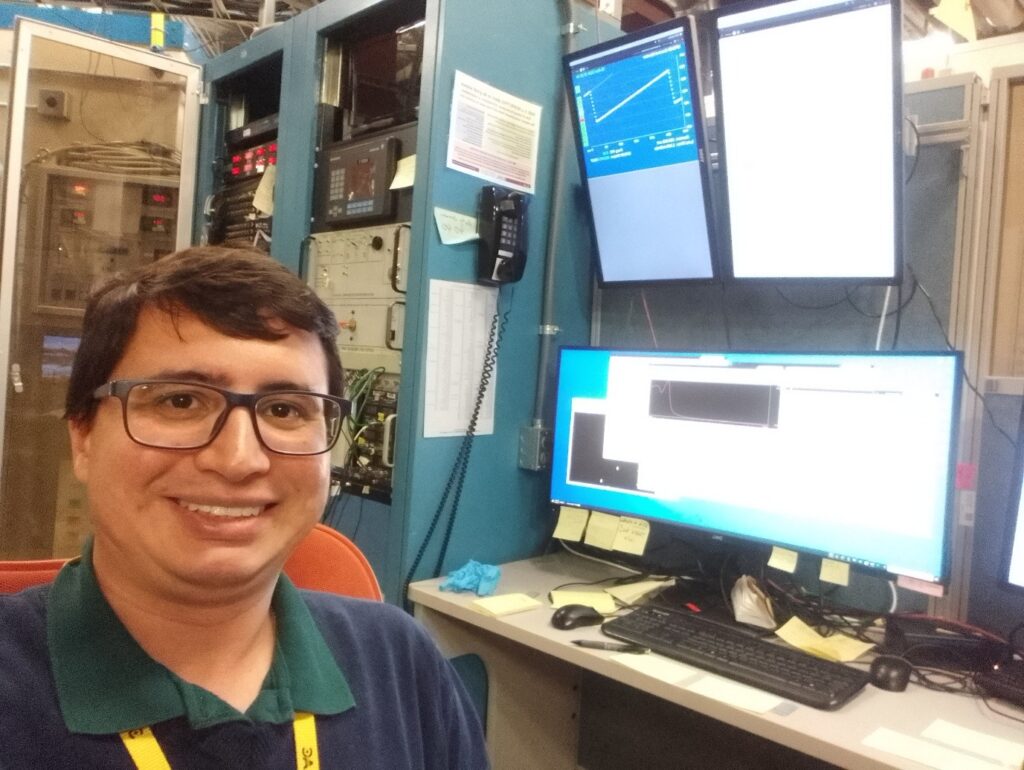
A series of recently published studies presents significant advances in overcoming the limitations of lithium-sulfur batteries—an emerging technology that offers advantages in cost, capacity, and sustainability over the lithium-ion technology that currently dominates the rechargeable battery market. Lithium-sulfur batteries generally consist of a sulfur-based positive electrode (the cathode), a metallic lithium negative electrode (the anode), and an electrolyte situated between them. Their charge and discharge operations (the energy storage and…

Professor Elton Sitta (UFSCar), a researcher at CINE, is a co-editor of the book “Contribuições da Química para os Objetivos de Desenvolvimento Sustentável” (Contributions of Chemistry to the Sustainable Development Goals), published by EdUFSCar. The book was officially launched on June 16 in Campinas, São Paulo, during the 49th Annual Meeting of the Brazilian Chemical Society (RASBQ). Through 11 chapters covering various scientific advances that help achieve the Sustainable Development…

To drive the energy transition, mastering the relevant technologies is just as important as having access to the necessary natural resources. That is why the Center for Innovation on News Energies (CINE)—which helps transform promising technologies into viable, scalable solutions—plays a strategic role in this process. This is the perspective of Pauline Boeira, who has served as CINE’s Deputy Director since April of this year. With a solid track record…
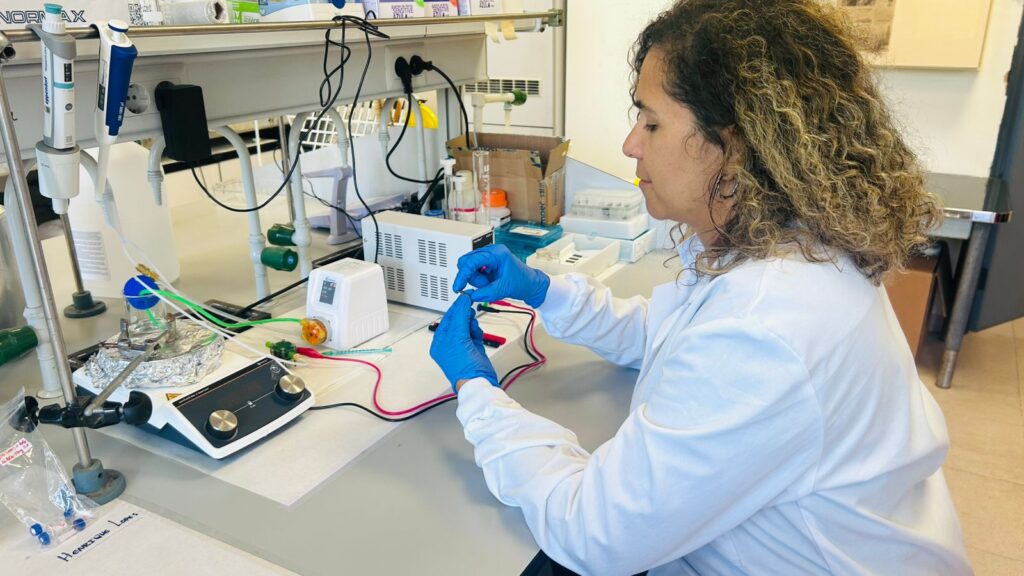
A recently published study presents a method that is faster and more economical than the conventional one for producing high-performance anodes for use in electrolyzers, equipment that generates hydrogen from the splitting of the water molecule. The work was carried out within the CINE Low-Carbon Hydrogen division. In an electrolyzer, the anode is the electrode where oxygen is released. This reaction, called the oxygen evolution reaction, generates electrons and protons…