




Interview with the Technology Transfer Coordinator at CINE








 E-mail
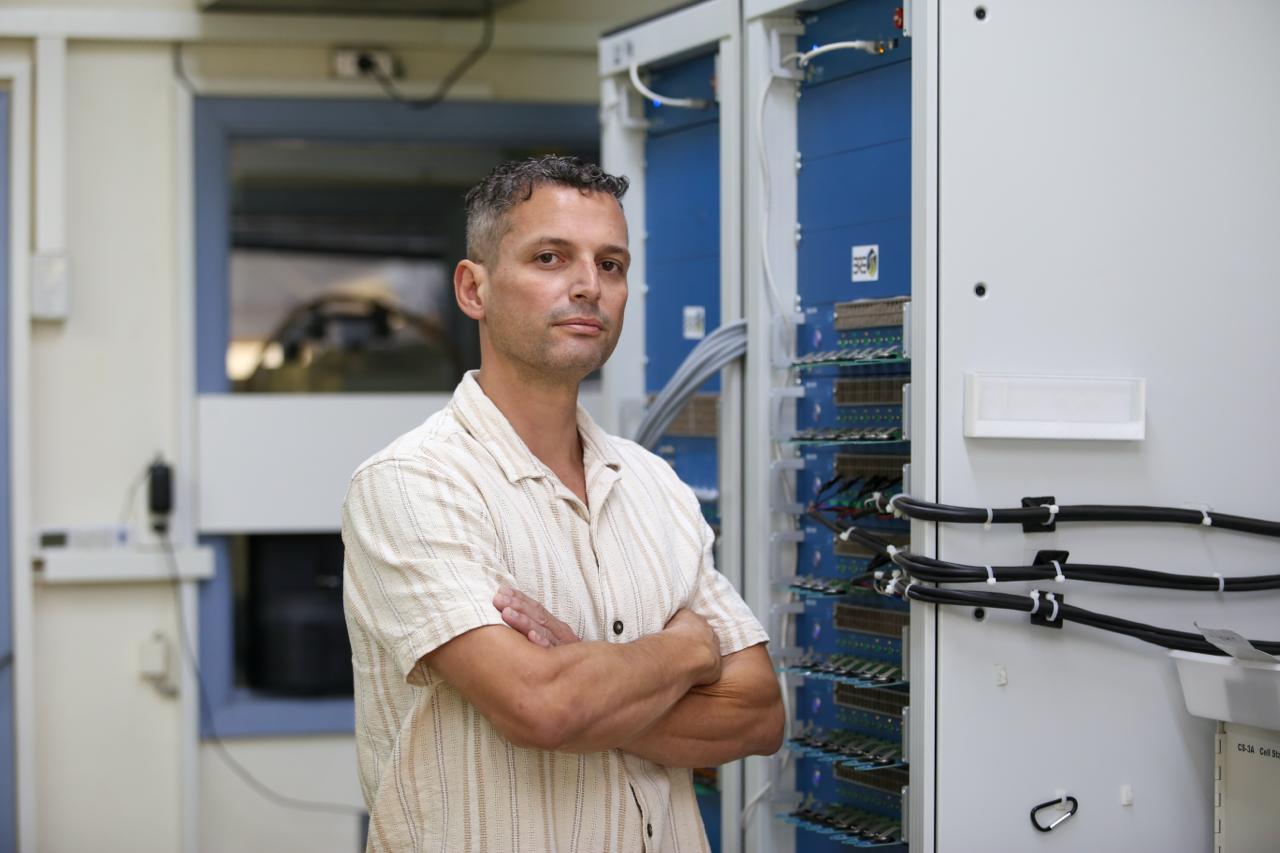
Technology transfer to the productive sector has been one of CINE’s core areas of activity since the Center’s inception in 2018. This division works to ensure that the science developed within CINE is transformed into products and services that accelerate the establishment of a low-carbon economy.
In mid-2025, Hudson Zanin, a professor at the School of Electrical and Computer Engineering at UNICAMP, became CINE’s Technology Transfer Coordinator. He has been with the Center since its beginning as a researcher in the Advanced Energy Storage program, and has served as the coordinator of that research program since 2024.
Hudson holds an undergraduate degree in Physics from UFSCar, as well as a master’s degree and a PhD in Electrical Engineering from UNICAMP. He also completed a specialization in Science Journalism through Labjor at UNICAMP.
He led the creation—at UNICAMP—of the first laboratory in South America dedicated to the manufacturing of battery and supercapacitor prototypes, as well as the Center for Battery Manufacturing, Validation, and Certification (CMB).
To date, Hudson has co-authored approximately 200 scientific papers published in international journals and has filed 22 patents. Furthermore, he has supervised around 150 research projects at the undergraduate, master’s, doctoral, and postdoctoral levels.
At CINE, he has been involved in various initiatives to engage with the productive sector—ranging from delivering presentations at events with corporate partners to organizing two events for CINE members, designed to foster entrepreneurship and identify technologies with the potential to be developed into commercial products. In this interview, Hudson Zanin discusses CINE’s Technology Transfer division.
A review of his professional background reveals a clear commitment to bringing knowledge generated within the university to the broader society—whether through technology transfer or science outreach. Tell us about your motivation in this endeavor and the key results you have achieved so far.
My motivation stems from a commitment: public universities are funded by society and, in return, must provide society with solutions, jobs, and accessible knowledge. My specialization in science journalism at Labjor reinforced this purpose. Among my achievements, I would highlight over 22 patent applications (8 of which have been licensed), more than R$ 140 million raised for projects, the establishment of the CMB—the first battery manufacturing pilot plant in the Southern Hemisphere—and the dissemination of information about batteries through television, podcasts, and social media.
Technology transfer is a process that can involve various stakeholders and can be applied to technologies at different stages of development. What are the maturity levels of the technologies at CINE, and which stakeholders are needed to bring these technologies to market?
We use the TRL (Technology Readiness Level) scale, which ranges from 1 (scientific principle observed) to 9 (product proven in an operational environment). Most of CINE’s technologies fall between TRL 1 and 3, with some reaching level 4 or 5. The market, however, typically looks for solutions at TRL 7 or higher—those that have been demonstrated in a real-world environment. This gap is known as the “valley of death.” Crossing it requires a chain of stakeholders: researchers, Technology Transfer Offices (TTOs), EMBRAPII Units (which operate specifically between TRL 3 and 6), startups, and companies willing to co-invest.
What are the primary objectives of CINE’s Technology Transfer department?
Our goal is to translate CINE’s cutting-edge science into concrete impact. To achieve this, we aim to identify market-ready potential early on, secure intellectual property protection through the Technology Transfer Offices (TTOs) of our partner universities, foster collaboration between researchers and companies from the very inception of projects, and systematically advance our technologies toward the level of maturity required by the market—ultimately leading to licensing agreements, the creation of startups, and new partnerships. We also aim to develop human capital, which is the most efficient channel for technology transfer.
What are the main challenges CINE faces in achieving these goals? And what actions are planned to overcome them?
We need to be realistic: the greatest challenge lies in the gap between the maturity level of our technologies and what companies are actually looking for. Another challenge is funding; while development agencies are essential, they are currently insufficient for setting up laboratories and maintaining research teams. To overcome this, we intend to map CINE’s portfolio according to TRL (Technology Readiness Level), train researchers in R&D&I mechanisms (such as those under the ANP, ANEEL, EMBRAPII, the “Good Law” [Lei do Bem], the Innovation Law, and the Informatics Law), and foster regular engagement with companies.
Considering the current national and international landscape, what key opportunities for technology transfer do you see for CINE at this moment?
I believe this is a very favorable time. The energy transition has triggered a global race for energy storage, green hydrogen, and renewable power generation, with the world seeking to diversify its supply chains. Brazil possesses a clean energy matrix, critical minerals, and biomass. Furthermore, R&D&I programs from the ANP and ANEEL, as well as the “Mover” program, mobilize significant resources—resources that remain underutilized by many research groups. CINE itself, funded by Shell (via the ANP) and FAPESP, serves as proof that this model works.
Contact

Hudson Zanin
UNICAMP
