




CINE holds first workshop dedicated to artificial intelligence








 E-mail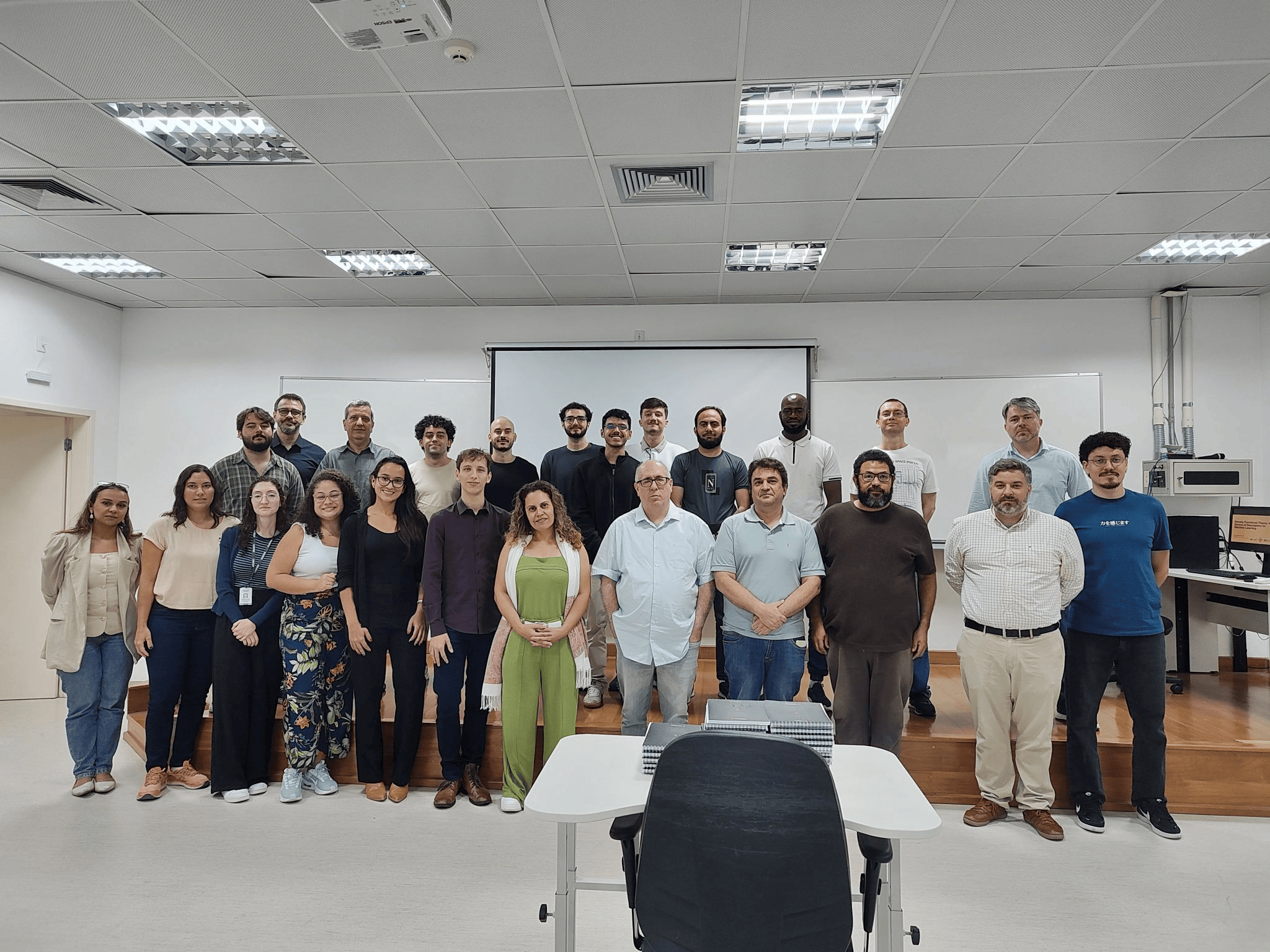
On March 5th and 6th, the Computational Materials Design (CMD) division at CINE held its first workshop dedicated to artificial intelligence (AI) applied to materials and energy.
The event took place in São José dos Campos, at the UNIFESP Technological Park campus, bringing together fifteen CINE members and fourteen external participants, including students, researchers, and professionals from companies.
The CMD division works on improving and applying advanced computational tools, including artificial intelligence, with the goal of developing efficient, sustainable, and low-cost energy generation and storage technologies.
“At CMD-CINE, we have used artificial intelligence on multiple fronts to accelerate various processes related to the study of new materials,” says Professor Marcos Quiles (UNIFESP), Co-Principal Investigator of the division and chair of the workshop. One example is the use of machine learning to predict material properties and suggest the most suitable materials for a given application. Another example is the development of models designed to monitor and predict failures in wind turbines and other devices.
With the goal of advancing CMD’s work involving the application of artificial intelligence, the workshop offered diverse sessions. The first day was dedicated to scientific lectures by experts and a roundtable discussion on the impact of artificial intelligence on materials design. On the second day, young researchers were able to present and discuss the results of their work, and there were exclusive meetings among CMD faculty. The program covered a wide range of topics, including machine learning, generative AI, neural networks, agentic architecture, natural language processing, and unsupervised learning, among others.
According to Professor Marcos, the workshop strengthened the integration of the CMD team, in addition to disseminating the research carried out, opening possibilities for the incorporation of new members into the program.
Contact

Marcos Quiles
UNIFESP
