




Interviews with our researchers: Lucia Mascaro








 E-mail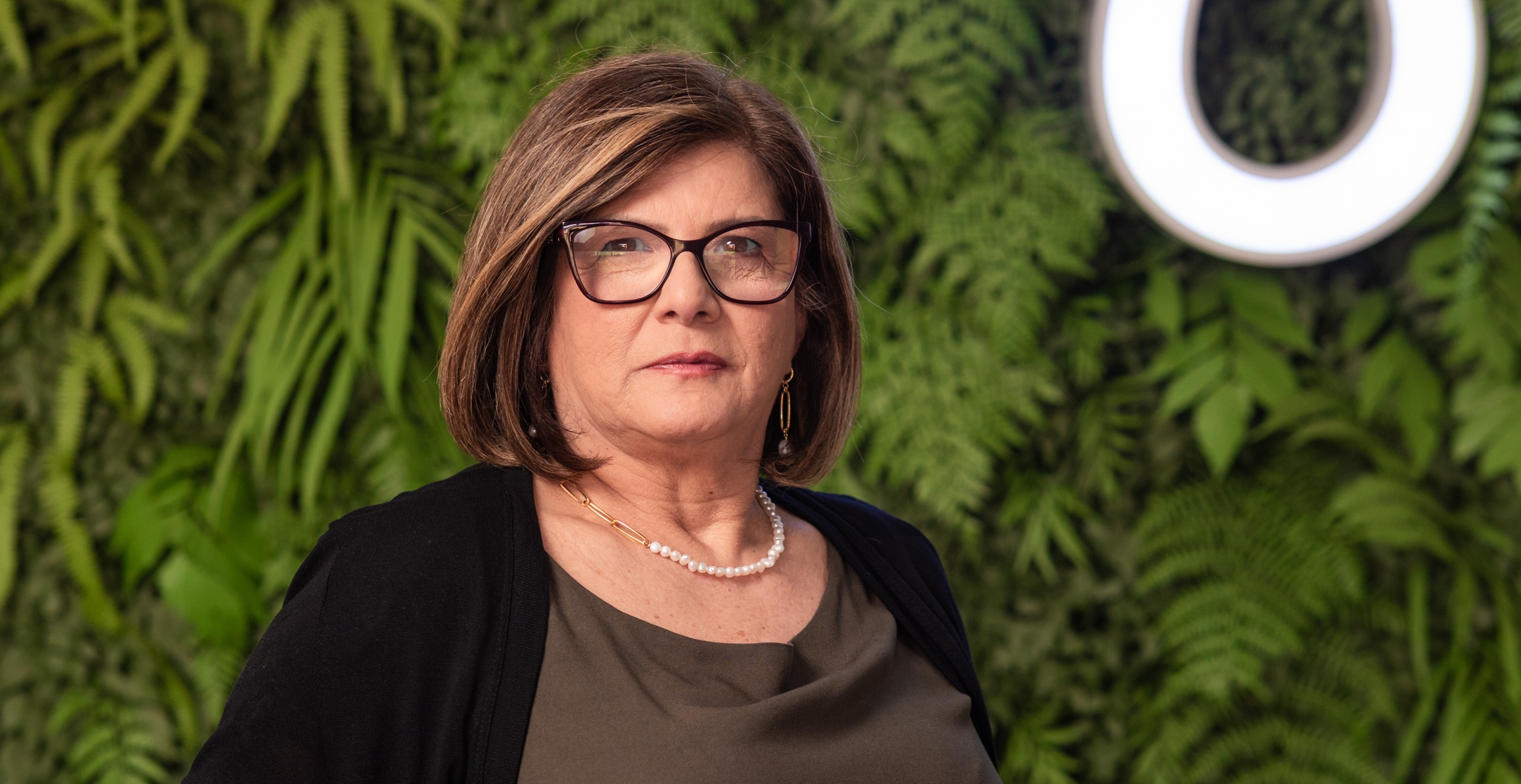
Lucia Helena Mascaro Sales is part of the minority group of female scientists who have reached the highest levels of their academic careers. Driven by an endless passion for knowledge and the conviction that science has no gender, she has achieved prominent positions in national and international institutions.
Lucia completed her undergraduate (1984), master’s (1988), and doctoral (1992) degrees in chemistry at UFSCar. After working as a postdoctoral researcher at the Institute of Chemistry of São Carlos, University of São Paulo (IQSC-USP), she became a Professor at the Federal University of Paraná (UFPR) in 1998.
In 2003, she returned to her alma mater as a professor. At UFSCar, she coordinated the undergraduate course in Chemistry from 2008 to 2013 and the Chemistry Graduate Program from 2016 to 2019. In 2017, she achieved the position of Full Professor.
In 2018, at the beginning of CINE, she began working as a researcher in the development of materials for hydrogen production by electrolysis – a topic she had been working on since 1994. In 2024, she assumed the position of Co-Principal Investigator of the Low-Carbon Hydrogen (LCH2) division at CINE.
Also in 2024, Lucia Mascaro won the Brazilian Women in Chemistry Award from the American Chemical Society (ACS) and the Brazilian Chemical Society (SBQ), in the “Leadership in Academia” category.
In 2025, she was elected vice-president of the International Society of Electrochemistry (ISE), a scientific society with 76 years of existence and more than 3,000 members from about 70 countries.
In February 2026, Lucia assumed a position on the Superior Council of the São Paulo Research Foundation (FAPESP), one of Brazil’s main funding agencies. She was appointed by the Governor of São Paulo, who chose her from a shortlist of three candidates, compiled with the participation of 385 voters from 25 higher education and research institutions in the state.
Lucia Mascaro is the author of more than 200 scientific articles published in indexed journals and 13 book chapters, in addition to having supervised dozens of research projects by undergraduate and postdoctoral students. She is a CNPq research productivity fellow at level 1B.
In this interview, Professor Lucia discusses how she found her place in science, reflects on gender inequalities in academia, and explains how CINE is helping to develop the low-carbon hydrogen industry in Brazil.
Tell us how you became a scientist.
I’ll tell this story interspersed with personal facts because I don’t see how to completely separate career and life. Both shape us and influence the paths we take, sometimes by choice and other times by necessity, but they always go hand in hand.
I was born in a very small town, Ribeirão Bonito, into a family where no one had attended higher education. Therefore, I didn’t have direct contact with academia or science during my childhood. Even so, I always loved studying and reading, and at age 12, when I suddenly lost my father, I began to see studying as a way to continue what he had always taught me. It was at this stage that I began to take my first steps towards science.
In high school, when I came into contact with Chemistry, I fell in love with the field and decided that was what I wanted to do, even though I had never been in a laboratory. Shortly after, my mother and I moved to São Carlos, and in August 1981, I enrolled in the Chemistry course at UFSCar.
Since then, I have never stopped seeking knowledge in an area where I have always felt very comfortable. During my undergraduate, master’s, doctorate, and post-doctorate studies, often doubting my own capabilities, I realized that I could, indeed, be a part of that world.
Over time, the transition from being a chemist to being a scientist occurred naturally. My passion for knowledge found in research the ideal space to develop ideas and, above all, to contribute to the training of new people. I joined the faculty at UFPR in 1998, and in 2003 I returned to UFSCar. In 2013, I did a research internship at the University of Bath in the United Kingdom, and in 2017 I became a full professor. Today I can say that my fulfillment lies precisely in the union of being a chemist, a researcher, and a professor.
When and how did you begin working in the field of renewable energy?
Since my undergraduate research, I have worked with the synthesis and development of materials, mainly obtained through electrochemical techniques such as electrodeposition. I studied the application of these materials in different systems, including corrosion protection, batteries, sensors, and electrocatalytic processes.
During my postdoctoral studies at the Institute of Chemistry of São Carlos (IQSC-USP) in 1994, I had the opportunity to work with Professor Avaca, who used electrodeposition of metallic alloys to study water electrolysis and hydrogen production. It was at this time that I began to get directly involved with the topic of hydrogen production and the development of catalysts obtained through low-cost and potentially scalable methods, using abundant and non-noble metals.
I continued developing this reserach line during my time at UFPR and later at UFSCar, with projects funded by CNPq and FAPESP, in addition to participating in the Center for Development of Functional Materials (CDMF), also focused on materials and energy. With the advancement of global discussions on energy transition and sustainability, this area has gained even more relevance.
In 2017, I was invited to join CINE, in a project funded by FAPESP in partnership with Shell, initially as an associate researcher in the Dense Energy Carriers division. Over the years, the work with hydrogen and renewable energies has become consolidated within the group. Currently, I participate in the second phase of the CINE project as Co-PI in the Low-carbon Hydrogen division and lead the alkaline water electrolysis project. In this stage, we seek not only to develop new materials but also to test them in laboratory prototypes, bringing research closer to real-world applications and advancing towards higher levels of technological maturity (TRL).
Do you consider it more difficult to develop your career because you are a woman? Have you noticed changes over time towards gender equality in science?
I wouldn’t say it was necessarily more difficult to develop my career because I’m a woman, but I believe the steps tend to be wider for us.
Often, it takes more steps to reach the same level that a man reaches with fewer steps. In practice, this means that, in many situations, recognition may come more slowly for women, even when the work done is equivalent or even greater. There are many examples and statistics that show this scenario; just look, for example, at the average time women take to reach higher levels of academic recognition, such as level 1A of the CNPq research productivity grant.
At the same time, it would be untrue to say that I have never faced situations where colleagues’ attitudes have had a misogynistic or sexist bias. However, these episodes have never diminished my desire to continue in science. I always say that I have no problem being a woman in my work; the problem often lies in the perspective of those who still believe that there might be some difference in ability or performance based on gender.
It can be said that changes have been sought in recent decades, both from a cultural and institutional point of view. Today there is greater awareness of the importance of equal opportunities in science and more initiatives aimed at increasing women’s participation. However, significant challenges remain. Statistics show that, although women are the majority in many undergraduate and graduate courses, their presence decreases at the highest levels of scientific careers. Therefore, I consider it fundamental that women are present in leadership positions and actively participate in discussions about equal opportunities in science. It is also important to give visibility to these issues and show, especially to new generations, that science has no gender.
Science is built by capable people, committed to knowledge, to collective work, and to respect. For this, a fairer, more diverse, and inclusive academic environment is essential.
Since August 2024, Brazil has had a law (14.948) that defines rules and benefits to stimulate the production and commercialization of low-carbon hydrogen in the country. How can CINE, particularly the LCH2 program, help the country advance in this direction?
Law 14.948 was an important regulatory milestone for the development of this new production and commercialization of low-carbon hydrogen in the country. In this context, CINE, through the LCH2 program, contributes on several fronts. One is scientific and technological advancement, with research focused on the development of new catalysts obtained through simple and environmentally friendly synthesis techniques, as well as deepening the understanding of the fundamental science that governs these systems. We also seek to advance knowledge of technologies that are already consolidated or under development, such as AEM-type electrolyzers, contributing to making them more efficient and viable.
Another central aspect is the training of highly qualified human resources. The division has a significant number of scholarship recipients at all levels, from undergraduate to postdoctoral. Many former scholarship recipients now work in hydrogen companies or are part of research groups abroad, demonstrating the impact of the training provided by the LCH2 division within the CINE framework. Furthermore, the work developed has achieved international recognition, reflected in the large number of publications on high-impact scientific journals in the field of hydrogen and renewable energies. In this way, CINE, and particularly LCH2, contributes not only to the advancement of knowledge but also to the consolidation of essential scientific and technological skills for Brazil to make solid progress in the area of low-carbon hydrogen.
Contact
Lucia Mascaro
UFSCar
