




CINE international collaboration advances the optimization of lithium-sulfur batteries








 E-mail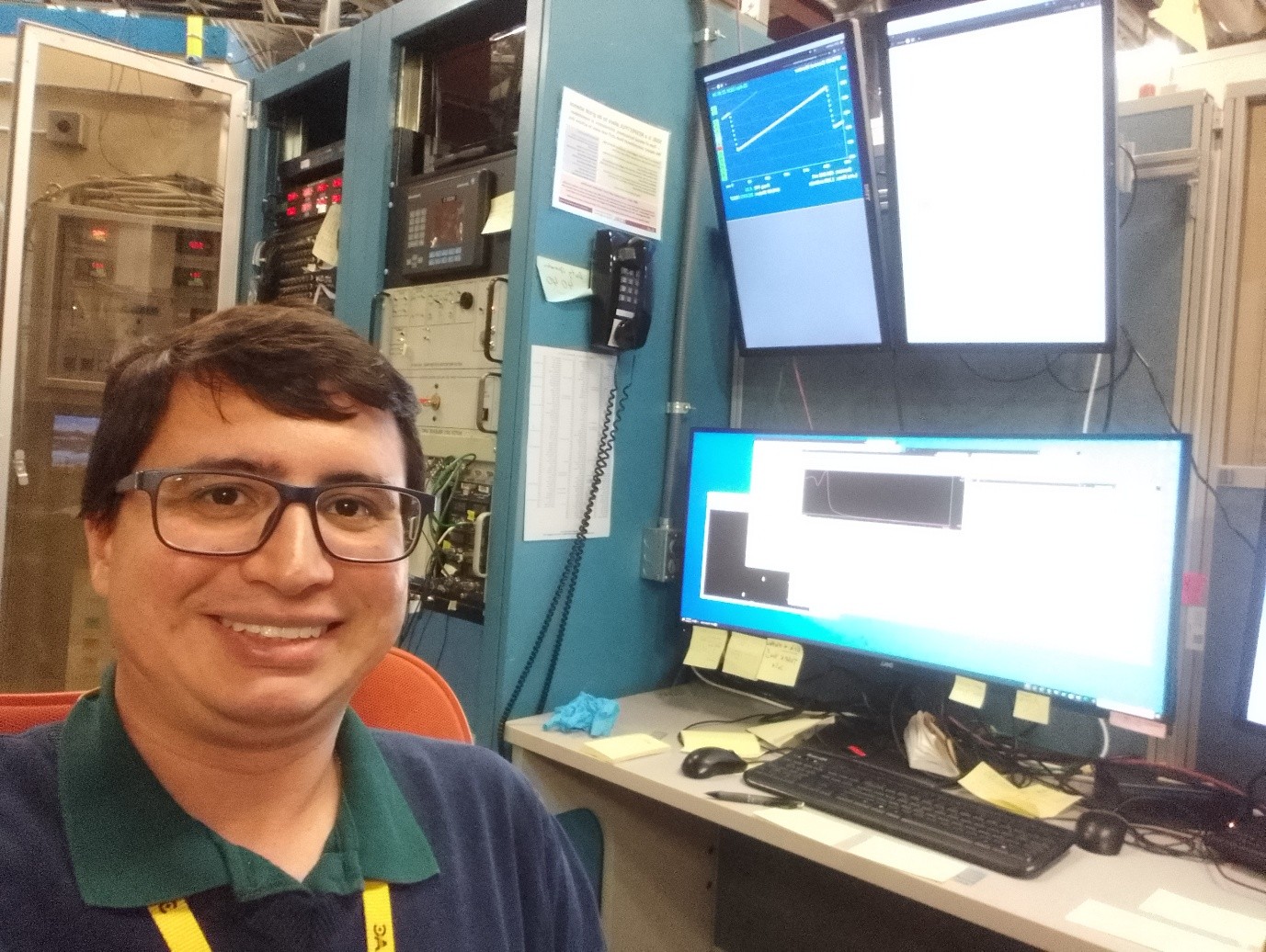
A series of recently published studies presents significant advances in overcoming the limitations of lithium-sulfur batteries—an emerging technology that offers advantages in cost, capacity, and sustainability over the lithium-ion technology that currently dominates the rechargeable battery market.
Lithium-sulfur batteries generally consist of a sulfur-based positive electrode (the cathode), a metallic lithium negative electrode (the anode), and an electrolyte situated between them. Their charge and discharge operations (the energy storage and delivery) rely on electrochemical reactions occurring between the sulfur and the lithium ions.
A major advantage of this technology is that its primary active element, sulfur, is abundant on Earth and widely available as a byproduct of industrial processes, meaning it can be obtained without the need for mining.
Furthermore, these batteries can store significantly more energy than lithium-ion batteries within the same volume. “Lithium-sulfur batteries have a theoretical energy density of 2,600 Wh/kg. While practical values are lower, they remain superior to those of conventional lithium-ion batteries,” explains Murilo Machado Amaral, who conducted research on this emerging technology during his doctoral studies at UNICAMP—as part of CINE—and is currently a postdoctoral researcher at USP, also working in the field of batteries.
However, lithium-sulfur batteries still face limitations that hinder their widespread commercialization. One of the main issues is the rapid, irreversible capacity loss these devices experience during each charge-discharge cycle, which leads to degraded performance and a shortened lifespan.
The problem stems from the interaction between soluble polysulfides and the anode. These compounds, which form during electrochemical reactions that typically occur in lithium-sulfur batteries, can migrate from the cathode to the anode. “There, they react with the metallic lithium, forming insoluble compounds that can passivate the anode surface, resulting in an irreversible loss of active material and affecting the battery’s lifespan,” explains Murilo.
To solve this problem, one possibility is to use a material at the cathode that hosts the sulfur, increases conductivity, and simultaneously inhibits the migration of soluble polysulfides toward the metallic lithium.
Developing such materials was one of the challenges of the doctoral work of Murilo Machado Amaral, conducted under the supervision of Hudson Zanin—a professor at UNICAMP’s School of Electrical and Computer Engineering and Principal Investigator of the Advanced Energy Storage Division at CINE.
“This research resulted in two scientific papers published in the journal “Batteries & Supercaps”, investigating the application of ceramic materials derived from polymer precursors as sulfur hosts in lithium-sulfur batteries,” says Murilo. The studies were carried out through a collaboration between groups at UNICAMP, Kansas State University, and the SLAC National Accelerator Laboratory (operated by Stanford University). Additionally, one of these studies involved collaboration with a scientist from the Spanish research center CIC energiGUNE.
Specifically, the studies examined the incorporation of titanium into silicon oxycarbide and the addition of boron to silicon carbonitride. Both resulting materials demonstrated effective performance as sulfur hosts in the battery cathodes by retaining polysulfides. Consequently, the materials enhanced battery stability and improved performance.
The studies combined the CINE group’s experience with energy storage devices—led by Professor Zanin—with the expertise of Kansas State University researchers (led by Professor Gurpreet Singh) in synthesizing ceramic materials for these devices, and the knowledge of SLAC National Accelerator Laboratory research coordinator Johanna Nelson Weker regarding battery characterization using synchrotron X-ray techniques.
The collaboration involved trips by Murilo to the United States for two scientific research stints. During the first, ceramic materials were synthesized and initial electrochemical tests were conducted at Kansas State University. The second stint focused on key characterization experiments at the SLAC National Accelerator Laboratory. Both periods took place during Murilo’s doctoral studies, with funding from FAPESP.
In addition to papers on the performance of ceramic materials as sulfur hosts in lithium-sulfur batteries, Murilo’s doctoral work resulted in a publication in the high-impact journal “Advanced Science”. This paper addressed another issue affecting battery performance: the instability of the cathode-electrolyte interface layer, the formation and stability of which are crucial for these devices.
The study investigated the formation of this layer using in situ Fourier-transform infrared spectroscopy. “This allowed us to directly monitor the formation and stability of this layer, which acts as an ionic conductor and electronic insulator within the batteries,” says Murilo.
Beyond the collaboration between the groups led by Professors Hudson Zanin, Gurpreet Singh, and Johanna Nelson Weker, the work on the cathode-electrolyte layer benefited from the valuable participation of other CINE researchers. Notably, the spectroscopic measurements were performed using a spectroelectrochemical cell previously developed and patented by the group of Professor Gustavo Doubek from UNICAMP’s School of Chemical Engineering. Meanwhile, Professor Pablo Fernandez from UNICAMP’s Institute of Chemistry contributed his expertise in this type of experiment. Researchers from the Federal University of Mato Grosso who are part of CINE also participated in the work.
The projects received funding from FAPESP, FINEP, CNPq and FAEPEX-UNICAMP (Brazilian agencies), Shell, the strategic support from the ANP, and funding from the U.S. National Science Foundation (NSF).
Paper references:
- Titanium-Modified Silicon Oxycarbide as an Efficient Sulfur Host for Lithium–Sulfur Batteries. Murilo M. Amaral, Arijit Roy, Manuel J. Pinzón C., Otavio Marques, Shakir Bin Mujib, Hudson Zanin, Johanna Nelson Weker, Gurpreet Singh. Batteries & Supercaps 2026, 9, e202500774. https://doi.org/10.1002/batt.202500774
- Boron-modified silicon carbonitride as a sulfur host for stable lithium-sulfur batteries. Murilo Machado Amaral, Arijit Roy, Romil Bhandavat, Hudson Zanin, Johanna Nelson Weker, Gurpreet Singh. Batteries & Supercaps 2026, 9, e70395. https://doi.org/10.1002/batt.70395
- Unveiling the Formation and Evolution of the Cathode–Electrolyte Interphase in Lithium–Sulfur Batteries. Murilo Machado Amaral, Otavio Jovino Marques, André de Navarro de Miranda, Aline Carlos Oliveira, Gustavo Doubek, Gurpreet Singh, Hudson Zanin, Renato Garcia Freitas, Johanna Nelson Weker, Pablo Sebastian Fernandez. Adv. Sci. 13, no. 9 (2026): e18282. https://doi.org/10.1002/advs.202518282
CINE members and former members who participated in the work: André de Navarro de Miranda, Manuel Jonathan Pinzón Cárdenas, Murilo M. Amaral, Prof. Gustavo Doubek, Prof. Hudson Zanin, Prof. Pablo Sebastián Fernandez and Prof. Renato Garcia Freitas.
Contact

Hudson Zanin
UNICAMP
