




Molecules that self-organize into layers improve the performance of perovskite solar cells








 E-mail
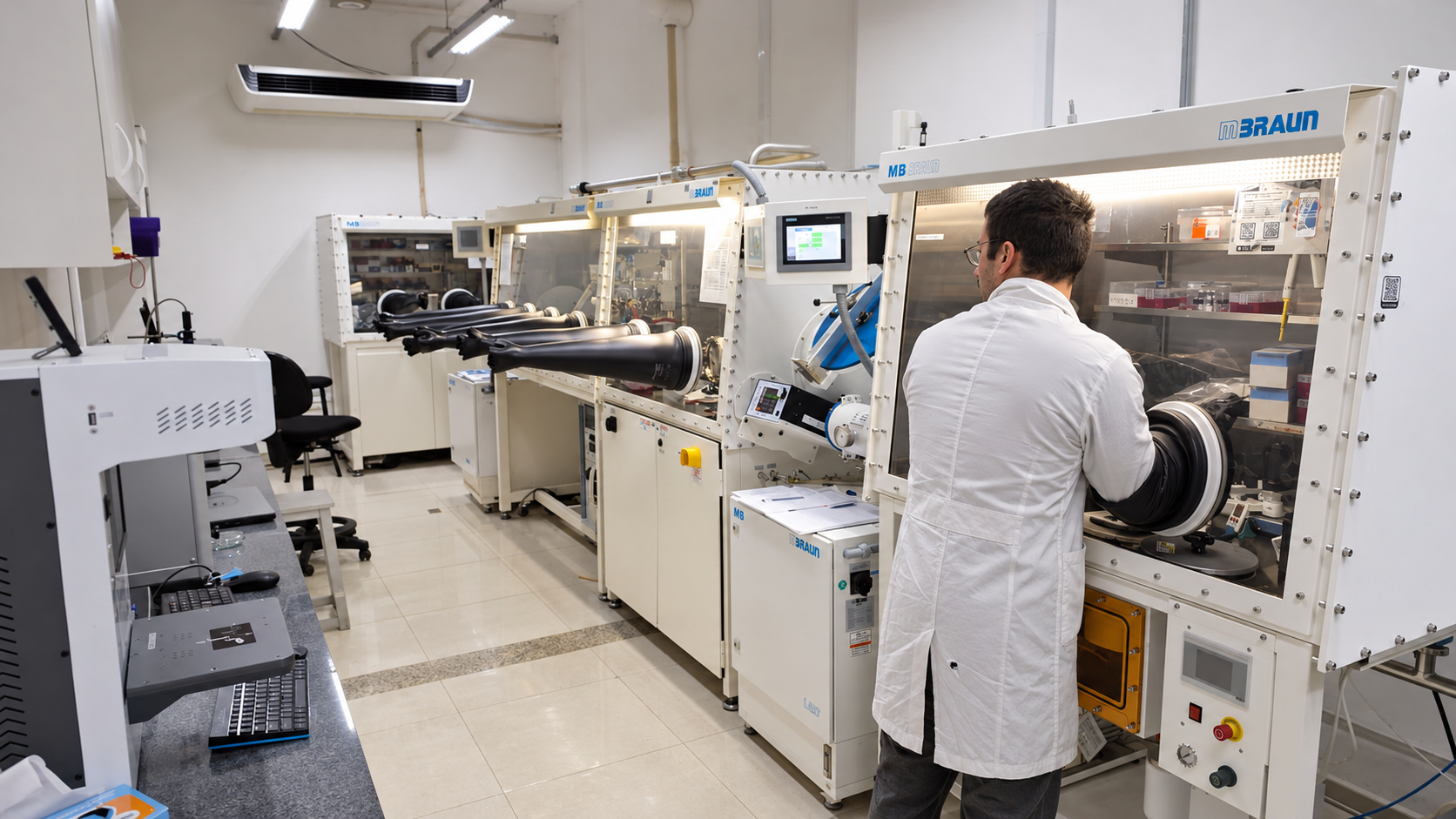
A new study from CINE has examined the effects of a molecular layer—only a few nanometers thick—on the performance of perovskite solar cells. The findings reveal a pathway to enhance the efficiency of these devices using minimal amounts of material and straightforward methods.
Perovskite solar cells consist of layers of various materials, each serving a specific function within the device. The perovskite layer, situated in the middle, absorbs sunlight. The energy from the light promotes the mobility of electrons (negatively charged) and holes (positively charged). These charges are separated and transported through electron-transport and hole-transport layers, respectively, before being collected by their corresponding electrodes and directed into an external circuit, where the generated electric current flows.
In this research, the authors investigated the use of self-assembled monolayers (SAMs) within the hole-transport layer, which is located between the perovskite film and the first electrode—composed of indium tin oxide.
Self-assembled monolayers are ultra-thin coatings formed by molecules that spontaneously organize themselves on the surface of a material. In perovskite solar cells, such a coating can modify the surface properties of the layers and act as a bridge between them, facilitating the transfer of charges generated by light absorption.
For this study, the authors synthesized three types of molecules based on triphenylamine, varying the chemical group attached to the top of this organic core. Once deposited onto the electrode, these molecules formed self-assembled monolayers, upon which the perovskite films were subsequently applied.
The materials were deposited using the spin-coating technique, which enables the creation of thin films with precise control over thickness and uniformity. Finally, photovoltaic devices were assembled using each type of monolayer. Following this, a set of characterization techniques was used to study the properties of the materials involved and the performance of the solar cells.
“The main contribution of this work was demonstrating how small modifications to the chemical structure of the molecules that form self-assembled monolayers can lead to significant changes in how these molecules are organized on a surface, as well as in interface properties and the efficiency of perovskite solar cells,” says Arthur Pignataro Machado, a member of CINE. He conducted this research as part of his doctoral studies at the UNICAMP Institute of Chemistry, under the supervision of professors Ana Flávia Nogueira and Caio Costa Oliveira—both of whom are also CINE researchers.
Specifically, the authors found that introducing a methoxy group (–OCH₃) at the top of the molecules yielded the most positive effect on the solar cell. “Devices produced using this molecule showed superior performance compared to the other structures investigated, as well as significantly better reproducibility in the fabrication of the photovoltaic devices,” Arthur states.
The study revealed that the careful selection of the chemical group positioned at the top of the molecules is crucial to the organization of the monolayer. This, in turn, directly influences the efficiency of charge-carrier (hole) separation within the transport layer, as well as the quality of the perovskite film.
These findings help address challenges related to the industrial-scale production of high-performance perovskite solar cells. “From a technological standpoint, these results offer pathways for developing more efficient interfaces using very small amounts of material and relatively simple deposition methods—both of which are desirable characteristics for large-scale manufacturing processes,” says Arthur.
This research was funded by FAPESP and Shell, with strategic support from the ANP, as well as by CNPq and CAPES.
Article reference: Terminal Group Effects on Molecular Organization and Charge Extraction in Self-Assembled Monolayers/Perovskite Interfaces. Arthur P. Machado, Felipe C. Braga, Carlos H. Stadtlober, Paulo E. Marchezi, Douglas S. Ribeiro, Murillo H. M. Rodrigues, Zeno C. Brandão, Diogo M. G. Neto, Caio C. Oliveira, Ana F. Nogueira. ACS Mater. Au, September 9, 2026; 6 (5): 1121–1130. https://doi.org/10.1021/acsmaterialsau.6c00070
CINE members who authored the article: Arthur Pignataro Machado (doctoral student at IQ-UNICAMP); Felipe Camargo Braga, Carlos Henrique Stadtlober, Paulo Ernesto Marchezi, and Murillo Henrique de Matos Rodrigues (postdoctoral researchers at IQ-UNICAMP); Zeno de Castro Brandão (doctoral student at IQ-UNICAMP); and Caio Costa Oliveira and Ana Flávia Nogueira (professors at IQ-UNICAMP).
Contact

Ana Flávia Nogueira
UNICAMP
