




CINE researchers advance the optimization of sustainable ammonia production








 E-mail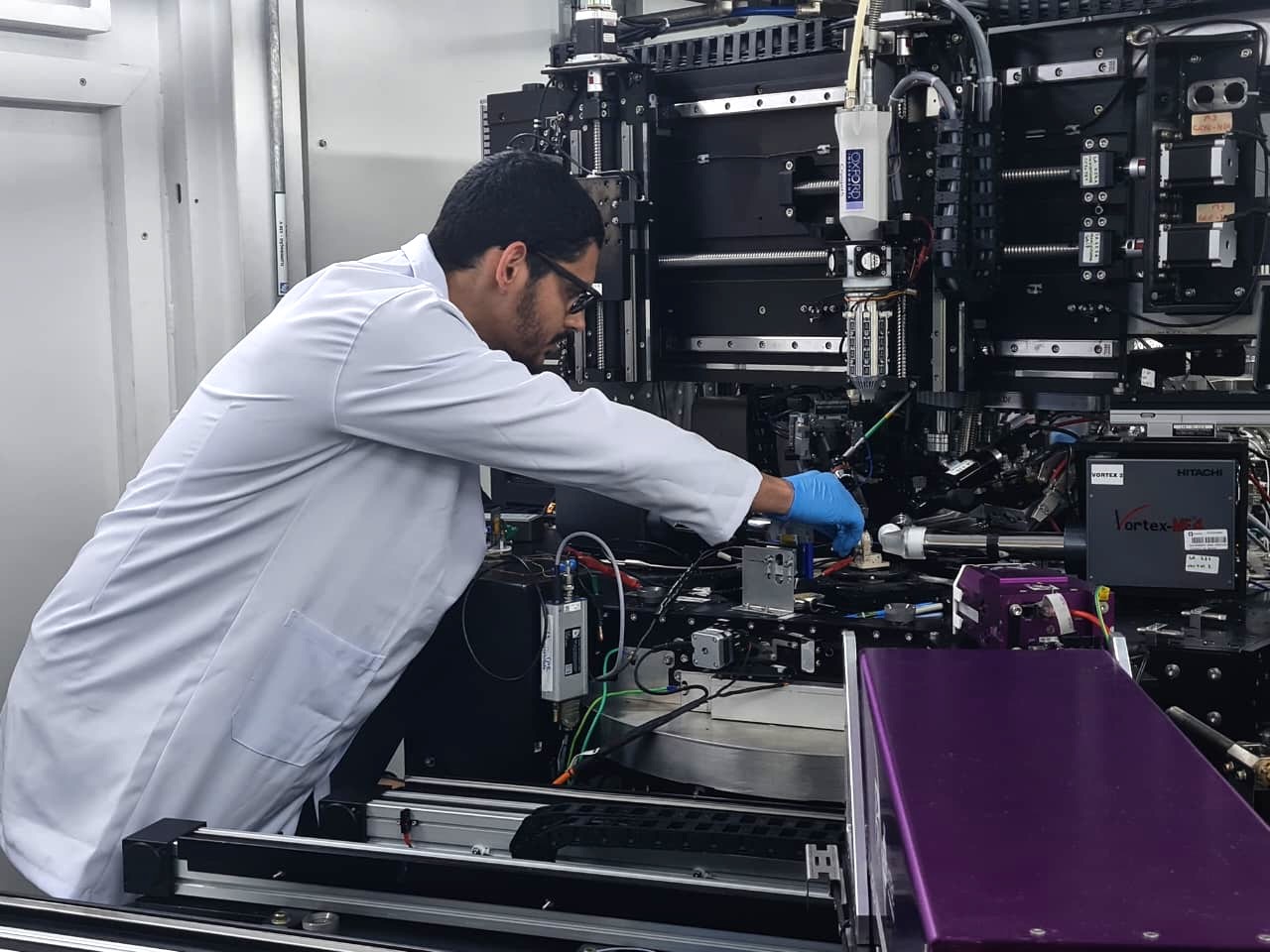
A multidisciplinary scientific team evaluated the long-term performance of a material used in the sustainable production of ammonia. The study’s results provide guidelines for designing more stable and efficient materials.
Ammonia (NH3) is one of the most widely produced chemical compounds in the world. In addition to its extensive use in the fertilizer industry, it serves as a refrigerant fluid and is used in the manufacture of various products, ranging from explosives to pharmaceuticals. Furthermore, this substance holds great promise as an energy carrier for a more sustainable economy, as it transports hydrogen and is far easier to transport than hydrogen itself.
However, the conventional method of ammonia production—the Haber-Bosch process—currently accounts for approximately 2% of global greenhouse gas emissions and 1–2% of worldwide energy consumption, due to the high-temperature and high-pressure conditions under which it operates.
In light of this, many research groups are investigating more sustainable ammonia production methods, such as the nitrate reduction reaction. This process takes place at ambient temperature and pressure and can readily utilize electricity from renewable sources. It consists of a series of electrochemical reactions in which the nitrate ion (NO3-) gains electrons and protons while losing oxygen. By the end of the reaction, nitrate—a compound the World Health Organization classifies as a pollutant in aquatic environments—is transformed into ammonia – a widely used raw material.
However, for the process to be viable, efficient and stable electrocatalysts are required. Electrocatalysts are materials that facilitate electrochemical reactions at an electrode, enabling them to occur more rapidly and with lower energy consumption. While the electrocatalyst is not consumed during the reactions, its structure may undergo changes that impact its performance.
Therefore, in this new study, the authors set out to analyze the long-term performance of a material that can serve as an electrocatalyst for the nitrate-to-ammonia reduction reaction: cobalt oxide (Co3O4) nanoplates. The researchers produced an ink based on this nanomaterial and applied it to a glassy carbon substrate, thereby creating the electrode to be studied.
“In this research, we evaluated, at a fundamental level, how prolonged voltammetric cycling impacts the performance of nitrate-to-ammonia reduction,” explains Matheus Pereira Sales, the lead author of the scientific paper reporting this work and a member of CINE’s Low-Carbon Hydrogen program. Sales is a PhD candidate at UNICAMP and has been studying aspects of nitrate-to-ammonia reduction since his master’s degree—also at UNICAMP—, always under the supervision of Professor Raphael Nagao.
In voltammetric cycling, the material is subjected to an increasing electrical potential until it reaches a peak. Afterward, the potential is reduced to the initial level. Throughout the process, the material’s electrochemical behavior is recorded.
In this case, the researchers subjected the electrocatalyst to one thousand voltammetric cycles to accelerate its aging. Both the new (pristine) and aged materials were then characterized using various experimental techniques to assess their morphology and structure, and the results were compared.
Additionally, atomic-scale computational simulations were used to gain a more complete understanding of the material’s behavior. “Beyond merely confirming experimental data, theory allowed us to investigate the changes in depth, revealing exactly which electronic characteristics are responsible for this performance,” says Marionir Castelo Branco, a postdoctoral researcher at IQSC-USP and a member of CINE’s Computational Materials Design program.
The study showed that aging makes the electrocatalyst more productive but less selective, meaning it produces a greater quantity of compounds other than ammonia.
According to the authors, collaboration between experimental and theoretical scientists from different fields—an interaction that CINE systematically encourages through events and other initiatives – was essential to the work’s success. “To investigate the electrochemical reduction of nitrate to ammonia, it is necessary to analyze the system using different techniques and cross-reference the results,” explains Matheus.
The work was funded by FAPESP, Shell, CNPq, and CAPES, with strategic support from the ANP.
Paper reference: Electrochemical Nitrate and Nitrite Reduction Reaction to Ammonia: Catalytic Aging and Stability of Co3O4 Hexagonal Nanoplates. Matheus P. Sales; Maykon L. Souza; Marionir C. Branco; Samuel C. Silva; João P. B. Da Silva; Rafael G. Yoshimura; Rafael L. Romano; João J. Mauricio; Manuel E. G. Winkler; Kauan L. Gomes; João B. Souza, Jr.; Santiago J. A. Figueroa; Fabio H. B. Lima; Cláudio F. Tormena; Juarez L. F. Da Silva; Italo O. Mazali; Raphael Nagao. ACS Appl. Mater. Interfaces (2026) 18 (21): 29982–29997. https://doi.org/10.1021/acsami.6c03616
CINE members and former members who participated in the work: Matheus P. Sales, Maykon L. Souza, Marionir C. Branco, Samuel C. Silva, Rafael G. Yoshimura, João J. Mauricio, Kauan L. Gomes, Juarez L. F. Da Silva, and Raphael Nagao.
Contact

Raphael Nagao
UNICAMP
