




CINE Talks reach the international scientific community








 E-mail
The 2026 edition of the CINE Talks program began with expanded participation. The first two seminars, held in March and April, had audiences of approximately 60 participants, doubling the number of seminars held last year.
This increase is mainly due to the decision to allow the participation of external audiences in the seminars. “Researchers who are not from CINE bring unexpected issues to the debate, allowing us to broaden and deepen the scientific discussion,” says Professor Juarez L. F. Da Silva (IQSC-USP), who directs the CINE Talks program while coordinating Education and Knowledge Dissemination at CINE.
“Furthermore, by opening CINE Talks to the public, we have achieved a significant number of foreign participants in the events, increasing the reach of CINE’s name in the international community,” adds Juarez. In this sense, the use of English in presentations and discussions is fundamental.
For Marionir Macedo Castelo Branco Neto, who delivered the first seminar of 2026, the impact of this openness was evident. “CINE Talks attracted international researchers in my field who were outside my network, resulting in interactions and messages after the presentation, a type of engagement that would hardly occur with the same agility in other formats,” he says.
Marionir conducts his postdoctoral research within CINE, carrying out computational studies of electrochemical reactions of great importance for the energy transition.
In the second CINE Talks of 2026, the postdoc assumed the role of session chair. “It was an excellent exercise to improve technical mediation, organize discussion time, and coordinate the questions, skills that complement my scientific training in a very objective way,” says Marionir.
Lectures for the energy transition
In its third edition, the CINE Talks program presents, throughout 2026, recent advances achieved by CINE in technologies for the energy transition.
Presented by young researchers from CINE and external collaborators, the seminars address the development of emerging technologies for batteries, solar cells, and sustainable fuel production.
Those interested in attending future seminars can contact qtnano@iqsc.usp.br for information.
Contact
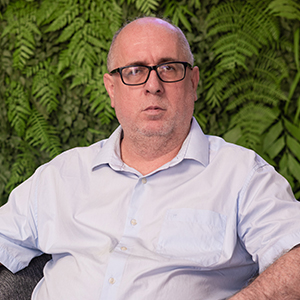
Juarez L. F. Da Silva
USP
