




Safety and mental health were the topics of an event for CINE members








 E-mail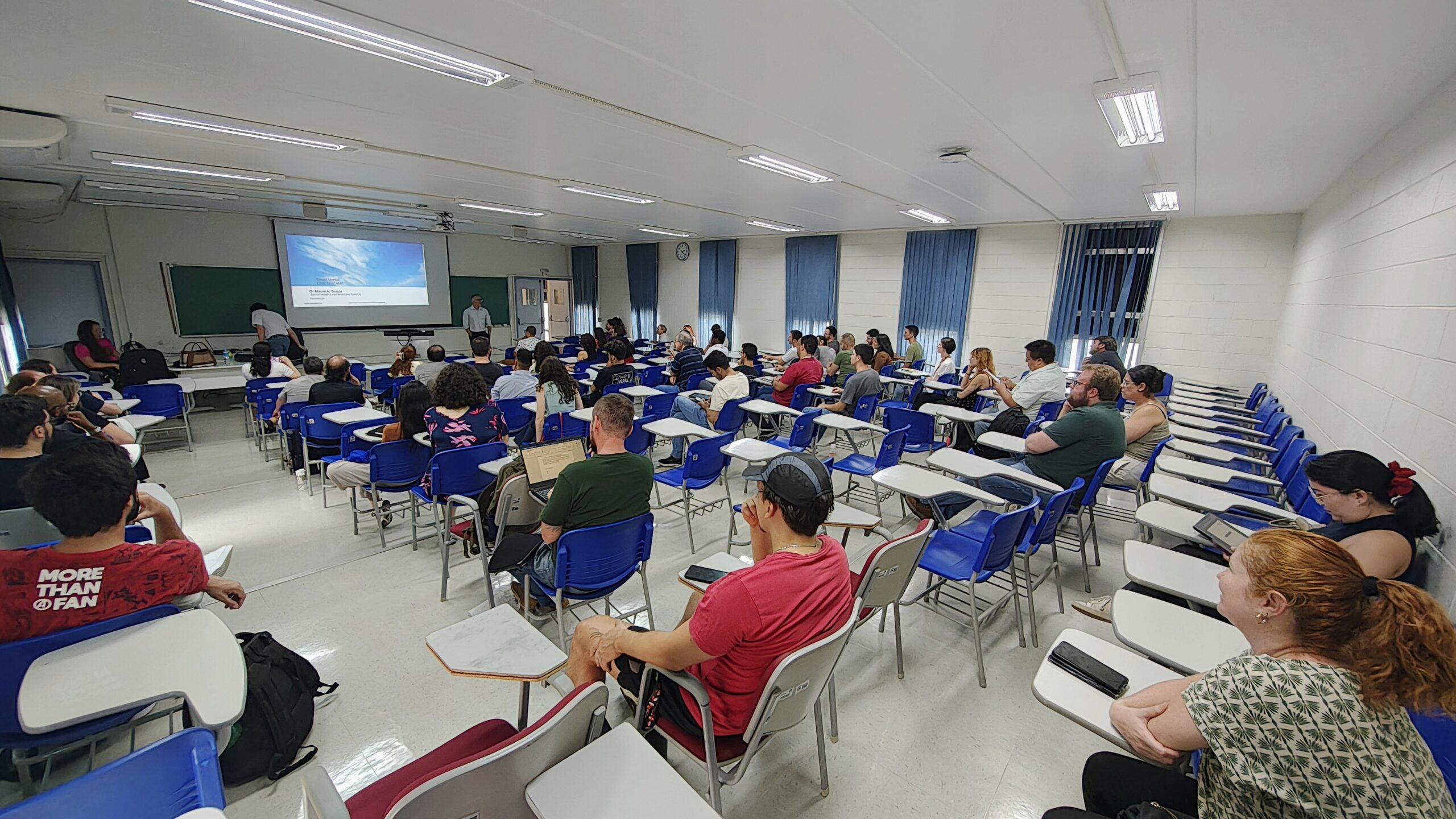
More than 80 students and researchers from CINE participated in a workshop on the afternoon of December 1st, which generated important reflections on safety and mental health in the workplace. The event was held in a hybrid format, both at FEEC-Unicamp and online, and was sponsored by Shell.
According to Mateus Giesbrecht, CINE’s Health, Safety and Environment Coordinator, these three issues are very important for all organizations, but in the rush of daily life, they are not usually addressed. “The workshop was a very important moment where we all stopped to discuss these topics, including exchanging best practices already implemented within CINE’s programs,” says Mateus, who coordinated the event’s organization.
“I left with the feeling that we are all responsible for building a culture of safety and well-being every day,” says postdoctoral researcher Raissa Venâncio, who participated in the workshop in person.
The first part of the event consisted of a lecture on mental health, given by Maurício Souza, a physician who leads Shell’s Health area in Brazil and part of Latin America. “The lecture on mental health brought important reflections on how taking care of ourselves directly impacts our relationships and the research environment,” says Raissa.
After that, Shell brought the Safety Day to the CINE members. This initiative, created to reinforce the safety culture within Shell and in the projects in which it participates, had this year the theme “How I respond matters.” The reflection on this topic was supported by presentations from Camila Brandão, Technology Program Manager for Renewable Power at Shell and CINE’s Deputy Director, and Sindelia Azzoni, a researcher at Shell.
The idea was to show that it is possible to have a mature attitude towards everyday problems and failures, without pointing fingers or generating punishment or embarrassment, while simultaneously widely disseminating the lessons learned. “We need to have zero tolerance for situations that could put people’s lives at risk, but we must also extract as many useful lessons as possible for the collective from an event that had the potential to be catastrophic, generating the best possible psychological environment to ensure that people continue to feel safe when pointing out problems and reporting their own mistakes,” explains Camila.
Commenting on the Safety Day, participant Raissa says: “I especially liked the approach focused on communication and how small actions and prior alignments can prevent risks and make the environment more welcoming and efficient.”
For Camila Brandão, the workshop should impact the CINE’s safety routine. “Above all, the event highlighted the importance of caring for one another and understanding that what happens to one affects the other,” she says.
Contact

Mateus Giesbrecht
UNICAMP
